
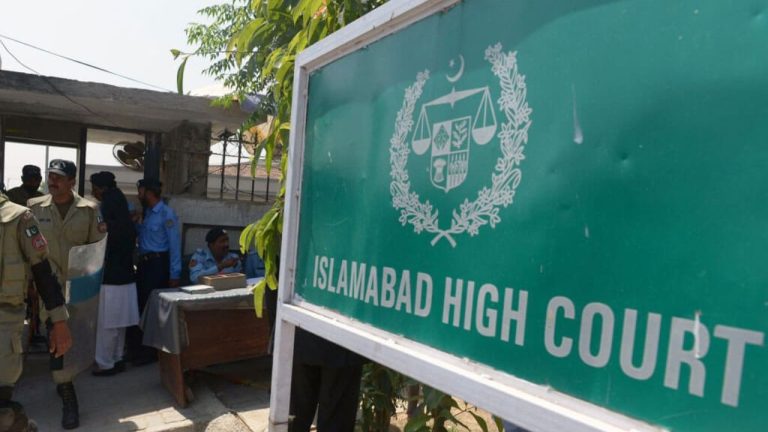
In a significant legal development, the Islamabad High Court (IHC) has initiated proceedings in response to a petition challenging the recent appointments at the Capital Development Authority (CDA). The petition, submitted by CDA Labour Union Secretary Amanullah, alleges that these appointments contravene a previous High Court judgment from 2018 and questions the qualifications of the newly appointed officials.
Key Points from the Hearing
Notices Issued to Key Officials: The IHC has issued notices to several high-ranking government officials, including the cabinet secretary, interior secretary, and establishment division secretary, to address the allegations made in the petition.
Petitioner’s Representation: Advocate Kashif Malik, representing the petitioner, presented compelling arguments against the recent appointments, highlighting the lack of requisite experience and educational qualifications among the newly appointed CDA chairman and board members.
Violation of Court Orders: The petitioner asserts that the appointments violate a prior High Court ruling, which explicitly prohibits appointing an ex-officio as a chairman or a board member.
Detailed Examination of the Issues
Policy Controversies: Advocate Malik criticized a self-formulated policy by the CDA board members that allows them to acquire one kanal plots within six months, which he deems unethical and a conflict of interest. Additionally, he raised concerns about the posting of over 100 employees in the CDA on deputation as a reward with plots, suggesting favoritism and mismanagement.
Grade Discrepancies: Another significant point raised was the discrepancy in officer postings, with grade 20 officers being subordinated to those of grade 19. This misalignment is in direct conflict with the High Court’s ruling and raises questions about the governance and operational efficiency within the CDA.
Court’s Actions and Future Proceedings
Summoning the DG Admin: The IHC has summoned the Director General of Administration to appear in person at the next hearing. This move indicates the court’s commitment to a thorough investigation and its determination to hold accountable those responsible for any misconduct.
Call for Invalidations: The petitioner’s counsel urged the court to invalidate the appointments of the CDA chairman and board members, arguing that their continued presence in these roles undermines the rule of law and the High Court’s previous orders.
Implications and Outlook
The Islamabad High Court’s scrutiny of the controversial CDA appointments underscores the judiciary’s role in maintaining checks and balances within the government. This case not only highlights potential irregularities within the CDA but also sets a precedent for the accountability of public officials.
Legal and Ethical Governance: Ensuring that appointments adhere to legal and ethical standards is crucial for the integrity of public institutions. The outcome of this case could lead to significant reforms in appointment processes and reinforce the importance of adhering to judicial rulings.
Public Trust and Transparency: By addressing these issues, the IHC reinforces its commitment to transparency and accountability, which are essential for maintaining public trust in governmental institutions.
Conclusion
The Islamabad High Court’s intervention in the controversial CDA appointments is a critical step towards ensuring lawful and ethical governance. As the case unfolds, it will be crucial to observe how the court’s decisions impact the CDA and broader public administration practices in Pakistan. This case serves as a reminder of the judiciary’s vital role in upholding justice and maintaining the integrity of public institutions.
Stay tuned for further updates on this pivotal case and its implications for the governance landscape in Islamabad.
Contact Information
- Phone: [0300-0063212 | 0301-3044339]
- Email: [assetbuilders@gmail.com]
- Address: [Asset Builders, Street Pak Turk School, Multan Public School Road, Multan, Pakistan, 60000}